Wednesday, March 21, 2007

Disciplinary Divisions in Social Sciences

How would we distinguish the various disciplines within social sciences? What qualifies someone as an Anthropologist and the other as a Sociologist, though they pursue the same academic training in the same department? Do the old disciplinary boundaries still determine the division between disciplines? The difference between disciplines, as I feel, do not exist any more in social sciences. The whole of social sciences could be regarded as one single discipline taking into account the inter-disciplinary approach that have dominated the social science research today. There existed differences in the way we looked at social phenomena. The approach and methodology of the various social scientists were different and that created compartmentalization among disciplines. However, I am not arguing that this difference in approach in social sciences do not exist anymore. It certainly does. But the research in social sciences has become more inter-disciplinary. It freely borrows from other disciplines where the individual disciplines lose their separate identity and create a shared social science discipline. Earlier, Anthropology was considered as the study of culture and primitive (village/tribal) communities/ societies. It followed a very unique tradition of fieldwork and ethnography (qualitative description) and asked micro level questions. In contrast, Sociology was the study of social structures, human interactions, and order & change in society (Auguste Comte). It asked broad and macro level questions and followed a more quantitative approach. Sociology was distinguished from Anthropology in terms of its focus and specialization on modern and industrialized society. As is the case in India, if Anthropology was introduced by the British to civilize the tribes, Sociology, not only in India but also world over, was introduced to understand the problems of modern industrial society.

Similar, is the case with other disciplines. The primacy of ‘space’ is emphasized in Geography. The primacy of economy is emphasized in Economics. Psychology studied the behavioral and attitudinal aspect of human beings. Political Science dealt with the study of power and politics in society. It specialized in the study of state, political parties, elections and political behavior of the people in society. But today, Sociologists also study the state, civil society, electoral politics and forms of government and state-building which used to be considered as the purview of Political Scientists. Similarly, political scientists also study the social structures and their implications for the state and power structures in society. The sociologists also have developed sub-disciplines like ‘political sociology’, ‘economic sociology’, ‘urban sociology’, ‘cultural studies’, ‘political economy’, etc. The study of ‘Space’ is no longer the specialization of Geography. Similarly, ‘social structure’ is no longer the arena of enquiry of Sociology, or ‘power’ and ‘politics’ of Political Science, and ‘culture’ of Anthropology. Anthropologists now without restraint use the political economy approach to study the micro social phenomena in the community level. What now brings the Sociologist and Geographers together is the idea of ‘social space’ – a physical territory that determines human interaction. In this sense, there is nothing today which is the sole domain of a particular discipline within social sciences. Same issue is being approached differently by different disciplines. The water tight divisions/ compartmentalization between different disciplines, though there exist many (subtle) differences, do not exist anymore within social sciences. It would be wise, as I feel, to call the whole social science as one single shared discipline.

Monday, March 19, 2007

Caging the Wandering Heart

What a wonderful Life in Udaipur? I miss it dude!!!!! The Place, the People and the friends. They are simply great!!!!!!! Nomadic life......Wandering feelings ....exciting tours and finally the erosion of erotic experices.......Weather changes; life turns upside down and the most sacred feelings of life go unrecognised or meet shocking news....This is life!!! We learn to live our life through our experinces and move on....Its not always a rosy day my dude...There is a shift - from the old experiences to new uncertainties and finally to future shocks.
After a long six months of leave from the scheduled and organised life Singapore, I am back again here. Life here in Singapore is alrite. Business here is as usual. Nothing has changed. Its exactly the same. I think I liked Udaipur a lot where life may be slow but brings different things everyday. It keeps changing there in every passing moment. Life here in the advanced cities like Singapore is very fast but is stagnant. Life has almost stopped experiencing the newness. Everyday is the same old thing. The place may have changed here with new infrastructures and buildings but life is as usual. Life here is predictable with the same pattern. There are no surprises.

Simplicity and calmness of life loses its charm in the metros. The deep dark nights in Kotra, the fear of ghosts, the sounds of the river and the chirpings of the birds, the narrow dirty streets, the stray cows, the red trucks, and the roadside tea stalls...Not here dude. What you have here is....tall sky scrappers, shopping malls, multiplex and the artificial wonderlands..Last weekend, I, along with some good old friends visited a new and much talked Shopping mall besides the Sentosa Island. We wached the movie called "The Freedom Writers Diary".
The view from the Mall was great. Wish you were there with me.....but you were not there, and will not be there anymore. This was a wakeup call to the subconscious human dreams.....that was the tragic end of the purity of a heart. "Freedom of human being is necessary, but have no idea about the effects of the freedom of human hearts". It really hurts....Cage it, confine it.....Its time for the wandering tribes to settle down.

Kapilash Shiva Temple


It is situated in the north east corner of Dhenkanal town at a distance of 26 Km from the district head quarters.The temples is situated in about 2239 feet from the sea level.The temple is 60 feet in height .
there are two approaches for the temple.One is through climbing 1352 steps and the other is ‘Barabanki’ or the travel twisting way.NarasinghdevaI constructed the temple for Sri Chandrasekhar in 1246AD indicated in the Kapilas temples inserption .In the left side ‘Payamrta kunda’and in the right side ‘Marichi kunda’ exists.
The temple has a wooden Jagamohana.Sri Ganesh,Kartikeya,Gangadevi,etc are found in the temple.Patita pavana Jaganath also remain in the temple as ‘Parsa deva’.Lord Biswanath templ is also situated in Kapilas .
According to some scholors this temple is older than the Chandrasekahr jew temple,hence it is known as ‘Budha linga’ .
There are many legends about kapilas pitha and its significance.History says it was the ashram of Kapila muni,to some scholars it is the second Kailash of Lord Siva.
Dridhar swami who wrote commentary on Srimad Bhagavatham stayed ther .There are some monastries in the premises.Lord chandra sekhara worshipped by the chintapatis.

Wednesday, March 14, 2007

Holi - The Festival of Colours

As the brief spring warms the landscape, northern India cuts loose for a day of hijinx and general hilarity. The festival of Holi is celebrated on the day after the full moon in early March every year.

Originally a festival to celebrate good harvests and fertility of the land, Holi is now a symbolic commemmoration of a legend from Hindu Mythology. The story centres around an arrogant king who resents his son Prahlada worshipping Lord Vishnu. He attempts to kill his son but fails each time. Finally, the king's sister Holika who is said to be immune to burning, sits with the boy in a huge fire. However, the prince Prahlada emerges unscathed, while his aunt burns to death. Holi commemorates this event from mythology, and huge bonfires are burnt on the eve of Holi as its symbolic representation.

This exuberant festival is also associated with the immortal love of Krishna and Radha, and hence, Holi is spread over 16 days in Vrindavan as well as Mathura - the two cities with which Lord Krishna shared a deep affiliation. Apart from the usual fun with coloured powder and water, Holi is marked by vibrant processions which are accompanied by folk songs, dances and a general sense of abandoned vitality.

Today Holi is an excuse for Indians to shed inhibitions and caste differences for a day of spring fever and Big Fun. Teenagers spend the day flirting and misbehaving in the streets, adults extend the hand of peace, and everyone chases everyone else around, throwing brightly colored powder (gulal) and water over each other.

The festival's preamble begins on the night of the full moon. Bonfires are lit on street corners to cleanse the air of evil spirits and bad vibes, and to symbolize the destruction of the wicked Holika, for whom the festival was named. The following morning, the streets fill with people running, shouting, giggling and splashing. Marijuana-based bhang and thandai add to the uninhibited atmosphere.

Promptly at noon, the craziness comes to an end and everyone heads to either the river or the bathtub, then inside to relax the day away and partake of candies. In the afternoon an exhausted and contented silence falls over India. Although Holi is observed all over the north, it's celebrated with special joy and zest at Mathura, Vrindavan, Nandgaon, and Barsnar. These towns once housed the divine Krishna.

Each area celebrates Holi differently; the Bhil tribesmen of western Madhya Pradesh, who've retained many of their pre-Hindu customs, celebrate holi in a unique way. In rural Maharashtra State, where the festival is known as Rangapanchami it is celebrated with dancing and singing. In the towns of Rajasthan — especially Jaisalmer — the music's great, and clouds of pink, green, and turquoise powder fill the air. The grounds of Jaisalmer's Mandir Palace are turned into chaos, with dances, folk songs, and colored-powder confusion.


N.B: Top Picture - My Dad posing for a Picture during Holi
Middle one - Rubbing the Monkey Face
Last One - My brother, causin and uncle during the Holi in my village

Source: The Indian Express

Monday, January 01, 2007

Public Sociology and Prof. Michael Burawoy

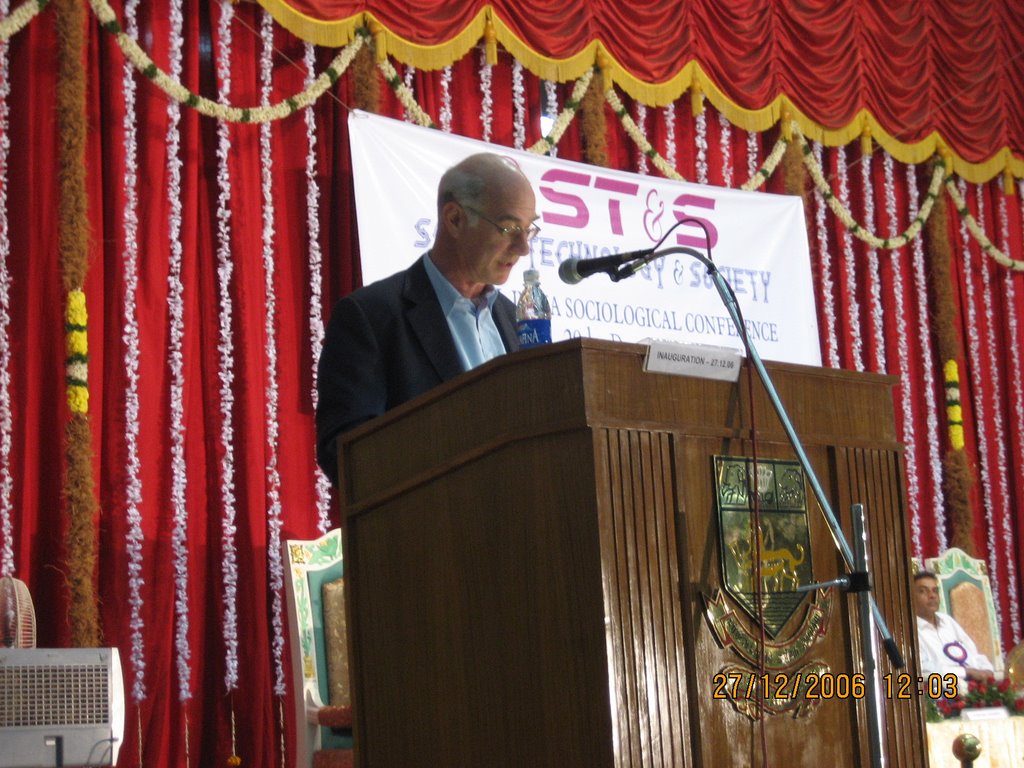
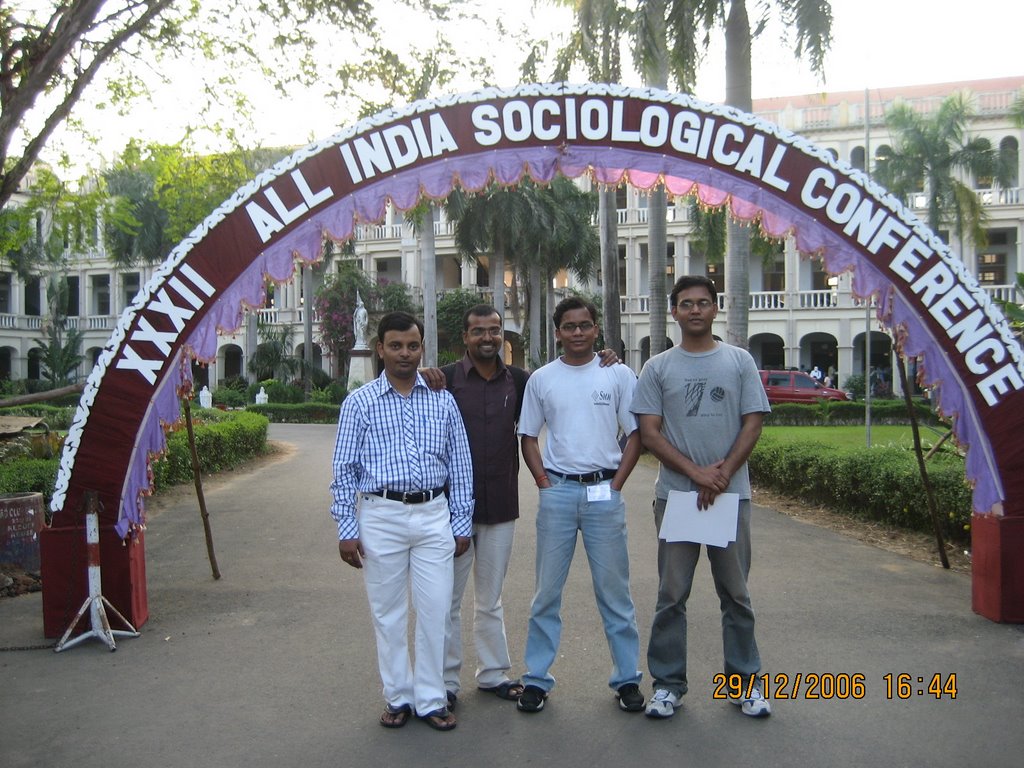
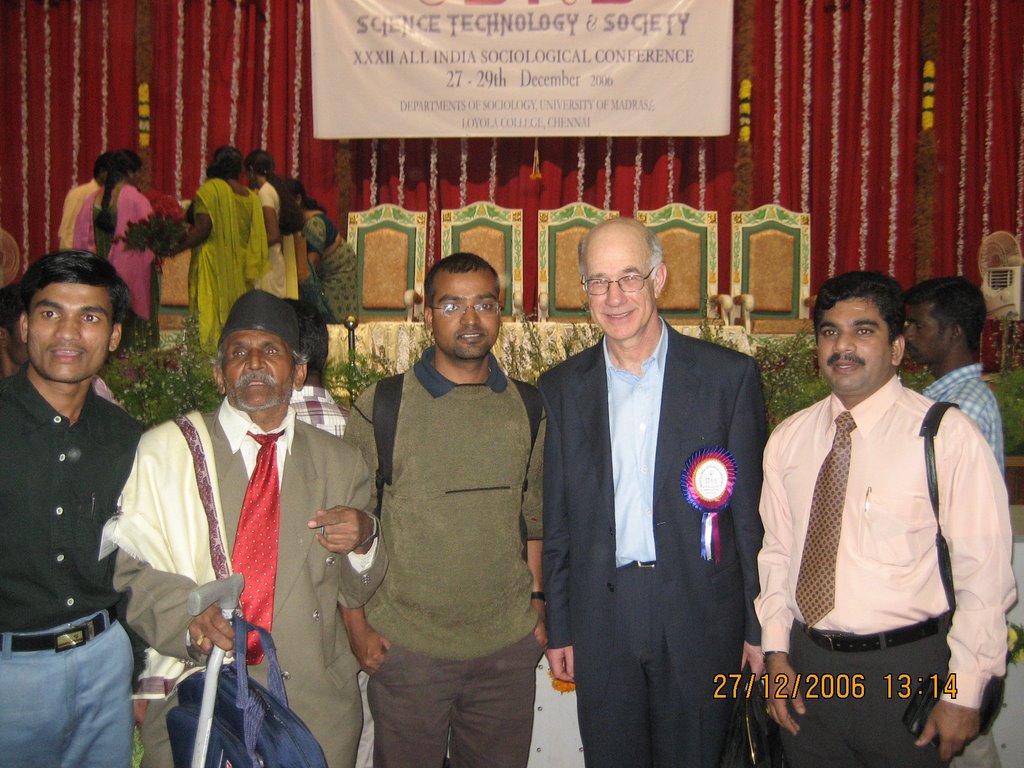
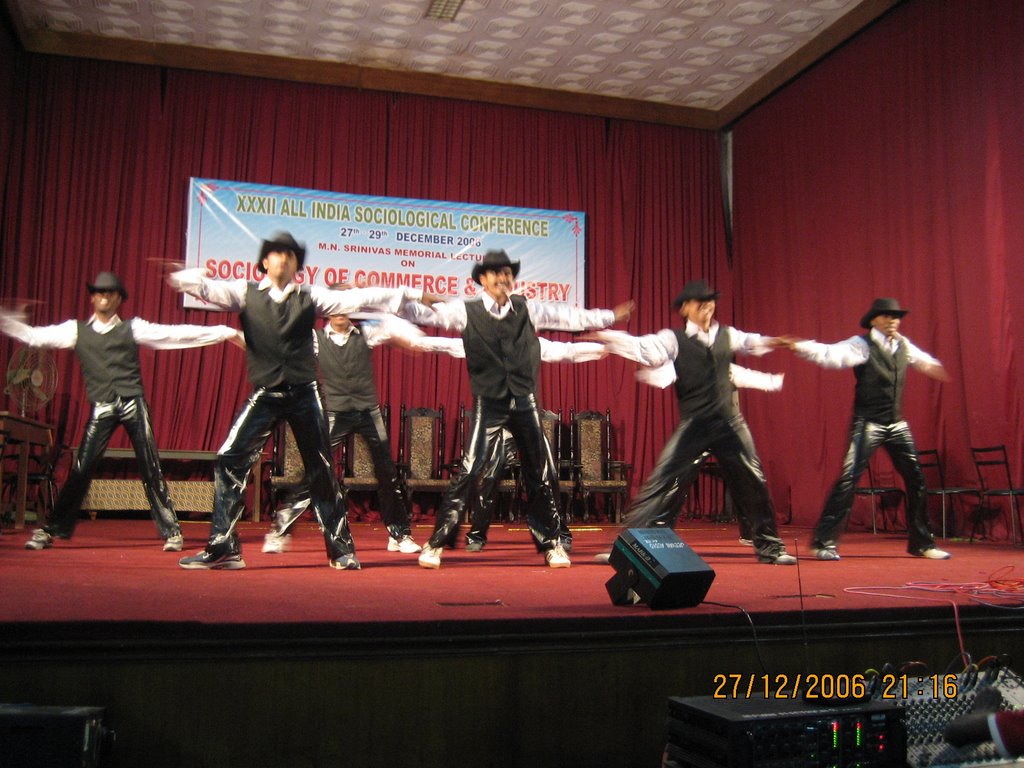
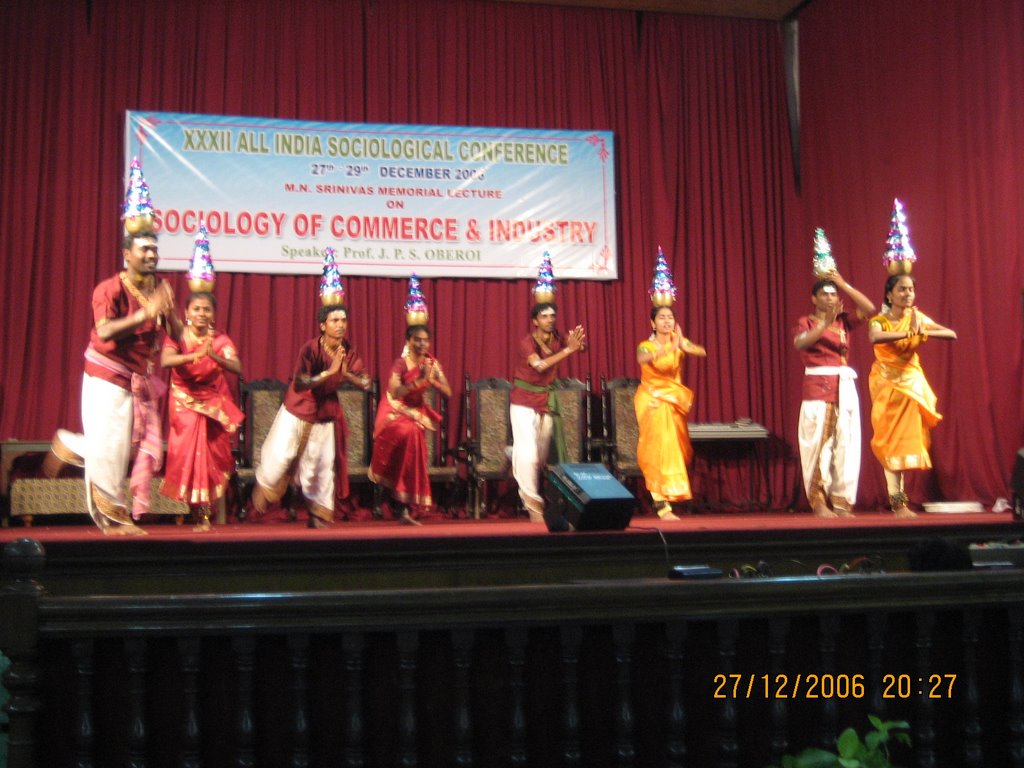
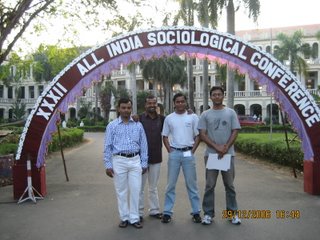
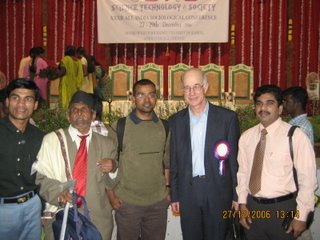
Address of Prof Michael Burawoy (Vice-President, American Sociological Association)at the XXXII All India Sociological Conference at Chennai on Public Sociology during 27 - 29 December 2006

Forty years ago, when I was a very young undergraduate in England, I actually came to India. That was the last time I have been here. Forty years ago. I have a confession that I came on a mission. I believe in those days, it was 1967; there was a time of great upsurge in many parts of the world particularly among the students. And I believe in that time education was the key to the freedom and emancipation of the world and I feel I am committed to that idea though hopefully a little less naively than I was in 1967. I came here in 1967 as an under graduate at the age of 18 or 20 to study the medium of instruction in university education. I do not know how I managed to figure out why that was an obsession of mine but I thought this will be an interesting issue to study.

It was my summer holidays and I was here for four months. I went around the country. I was in the University of Cambridge and there were number of people who had been involved in education there – Indian education, higher education – and they thought that this was an interesting project for me in the summer. So what I did? I am really very embarrassed to be saying this but I have a reason. What I did – I decided is that this was a technical problem whether to have a medium of education in English or Hindi or in a regional language. I believe that the issues have not quite been resolved yet. Nevertheless, in those days what I thought that to go around the country and to get people to translate a comprehensive test/ passage on development theory into regional languages. I go to a class and divide the 200 students and give them a comprehensive passage and see how well they did. I thought this was a technical problem. But you know there was a real answer to this question. What language one should have as the medium of instruction? I was very very naïve and it is humiliating to me forty years later to tell you this. But it does present a particular perspective – a narrow technical perspective on sociology. I believe what I learnt then was that, of course, the medium of higher education in India is not a “technical issue” but a “political issue”. I learnt that very quickly. I was in Madras Christian College, I was in Lucknow, I was in Gujarat, and I was in Bombay. Those are the various places I visited and I quickly learnt that the technical educational issue was actually a political issue. And that was my sociological education. So I am here today to THANK YOU for making me a SOCIOLOGIST. I was to born as a sociologist to recognize the technical issues or actually the public issues or the political issues. That was the fundamental sociological question that we cannot look at educational issues in a fundamentally technical composition. One has to go broader and think about the various interests – whether the interests in careers, in state, in politics of the regional state or whether the interest was in caste. This is what I learnt here in India.
Well, I became a SOCIOLOGIST here in INDIA and I am here to report back a little bit about what has happened to me and to give you my perspective. I am now a Sociologist in the USA, though I spend a lot of time different parts of the World. I will give you some perspective on sociology.

So, what happened to me after 1967? Actually I was a Mathematics Undergraduate. So I really did not know a lot of Sociology. I became a SOCIAL ANTHROPOLOGIST – an animal that is quite familiar to you in this country. I became an ETHNOGRAPHER, a participant observer in many parts of the World in different industries. I became an unskilled, semi-skilled operator in different parts of the World. I began my INDUSTRIAL SOCIOLOGY in a place called ZAMBIA in Africa. I came there in 1968 ad left in 1972. It was the immediate post-colonial years. I was studying what? I was studying the Copper industry and the way in which the Copper industry was responding to independence – these Multinational Corporations – how are they responding to the independence of Zambia. I was particularly interested in the way in which “race” and “class” interweaved in that period. I did the study from 1968 to 1972 and after I left things have really gone bad. The price of Copper fell and fell during the 1970s and then came the IMF and the World Bank with the Structural Adjustment Programmes. And the result was that the host society declined – both rural and urban populations. That was my ‘First Aftermath’.

The ‘Second Aftermath’ or the second project I undertook is to take up a Ph.D degree in University of Chicago where I met my friend Anand Kumar. He came a little bit after me when I was leaving. Here I studied the industrial working class in South Chicago. 1973-74 – there I began to understand the development of a particular form of what I call the ‘hegemonic industrial relations’ – whether that coordinative class compromise between workers and managers. It was the height of fact of trade union organizations in Industrial sector. What happened after 1973-74? After I left, – decline. What happened in South Chicago was deindustrialization, manufacturing companies moved out and the South Chicago became an Industrial Wasteland. Trade Union movement has declined in USA in 1973-74. Secular decline. Well, that was Chicago.
So, then I thought I need to think more about the non-capitalist societies because lot of my arguments are about capitalist character of production and labour. So I thought I should go to a non-capitalist society. I was very intrigued to go to POLAND to the Solidarity movement which was of course the first and last societal wide movement of the working class. And I thought it was very strange as it was happening in a society which I call ‘State Socialist Society’ not a capitalist one. You Academics are very slow. We take a lot of time to catch up with the events in the World. By the time I got my bags together, by the time I began to learn Polish, there was a coup. Yarozoski took over power. Solidarity was repressed. Even though it lasted for 13 months, I never made it to Poland. Well, I made to the next best place which is HUNGARY where I also became worker in many factories. I had a good time in Champaign factory. I do not know how many of you worked in Champaign factory here. But they can be lot of fun. We never drunk Champaign; we only drunk beer. But anyway I worked in many factories in Hungary. I was trying to understand the characteristics of the working class – why Poland had developed a radical working class revolution and Hungary has not? What was the character of socialist work organization? So I was working in many factories and living with the working class. And I did this for a period of from 1982-83 to 1989. Actually I was also a member of the October Revolution Socialist Brigade. Very proud of that. But anyway I was working there on and off. What I did not notice was that the Hungarian Political Structure was crumbling and disappeared. In fact, it was overthrown in 1989 in those transformations that swept across Eastern Europe. So I thought well I did not come to Hungary to study the transition from socialist to the capitalism. I did not come to Hungary to study the development of market economy. I came to Hungary to study the “democratization of socialism”. So I decided to go to the last, in that part of the World, the socialist society still existing which was then SOVIET UNION. So I went there in 1990-91. As you know Eastern Europe made this market transition and in Eastern Europe this has been a sad story. Fellow workers in the October revolution Socialist brigade are now with or without a job or subject to degradation. In fact Hungary was fast catching up with the wasteland of South Chicago. This became again another industrial wasteland.

So I moved on the RUSSIA. And you know, it was only a few months. I was working in a furniture factory. I stopped in July and in August there was this attempting coup that failed and in December what would have happened? The Soviet Union disintegrated. So I have been two or three years of watching the systematic decline of the Soviet Society was subject to a radical shock therapy intervention of marketization and privatization. My friends say you are not going anywhere else. They blame me for these catastrophes. I as a Sociologist do not blame myself. I do not think I am such a heroic person.
So, I believe what is common to all these four experience – Zambia, South Chicago, Hungary and Russia – is the aftermath that I left behind is the “marketization”. Everywhere marketization has disrupted and destroyed what was industrial society. I believe we are in a period of what I call “third wave marketization” and I do not think that India has escaped it either. If I imagine what Chennai was forty years ago and I think today we see the power of markets – positive and negative in this very city. For me to begin to think about the significance of third wave marketization for sociology, I have drawn from the works of Karl Polanyi. I do not know whether he is a familiar writer to you here in India but in the United State and in Europe he has become an icon of a “critical sociology” – a sociology that is critical of market fundamentalism sometimes known as neo-liberalism. Karl Polanyi lived from 1886 to 1964, actually very identical years to the life of Nehru. Polanyi was originally born in Hungary and his work has come to be known for its critical assessment of the development of the markets. He has two theses –

1. One thesis is that for markets to succeed, for markets actually to develop, they have to be embedded in social relationships in society and the danger is that when markets destroy society and destroy the state that necessary to keep markets going then they lead to major catastrophe.
2. The second argument is that the markets not only need society but also generate what he calls “counter movements”. Where markets develop, they develop reactions from society that try and contain and constrain markets.

It is this later argument that use to develop my understanding of the relationship between the third wave marketization and sociology. Karl Polanyi wrote the book called The Great Transformation that is his one single most important canonical work in 1944. He was obsessed about the rise of Fascism and Stalinist Communism in the World that time but also the outbreak of the First and Second World Wars. He put the blame on markets. He said that market fundamentalism that push the argument that markets are so generating and self-reproducing had led to such as severe reaction that Fascism and Communism as a response or a particular form of coercive communism. He thought that there would never be another wave of market fundamentalism. He could not anticipate it and his vision of the future was very much of a market embedded in society – a market was in fact actually a responsive to a collective self-organization of civil society and the state. He could not imagine the World as we know it today.
Marketization is spreading everywhere. Let me outline briefly how to understand third wave marketization historically and to some extent geographically and I want to draw upon the ideas of Karl Polanyi particularly his most central idea – the idea of a ‘Fictitious Commodity’. A fictitious commodity is a commodity that when it is exchanged it loses its use value. So we have three fictitious commodities – labour, money and environment or land. He calls it land and I am going to call it environment or you may call it the nature. What he meant when he called LABOUR a fictitious commodity? It’s when labour or the workers sell their labour power and are easily fired and hired by the will of capital, they loose their capacity to generate productively production. They loose their use value. Labour has no longer become productive when they are subject to tyrannical laws of the market. Equally when MONEY is subject to arbitrary exchange, it looses its capacity as a medium of exchange. And when LAND is subject to commodification and exchange, it is degraded and actually threatens the existence of humanity. These are the three main Fictitious Commodities. Though he did not put it in chronological order, I would suggest to you that there three waves of marketization each corresponding to a new fictitious commodity.

The First Wave of Marketization broadly we might say is the 18th century and we are particularly talking about Europe though colonies were also involve in this. And the commodity that was fictitious, that was subject to exchange and which generated a reaction or a counter movement was indeed labour. The Second Wave, I would put, What Hobsbawm calls “the Short Twentieth Century” – that is between the First World War and I am going to put it till 1973. What happens in that Second Wave of Marketization is that markets developed in the 1920s and 30s through out the World and there is a reaction by the Nation-States to protect them-selves from this International trade? Countries stood as obstacle that the money is no longer freely exchange in the international arena. So states begin to develop a regulated economy – “organized capitalism”. And we associate this with Fascism – very much the idea of an organized Market economy; Communism – in 1920s in Soviet Union the market was very much in the advance but in the 1930s collectivization came and planning came and this is a reaction like in other countries and this is a specific reaction to marketization. In the United States, we have the new deal and in Europe we had Social Democracy – these emerged as a response to commodification of money in the international arena – the protective policies of the States. This Second Wave leading to a reactionist Nation-State. If the First Wave marketization reaction to the commodification of labour is local and union organizing; the Second Wave of Marketization is the building up of Nation-States that regulate economy. The Third Wave Marketization in my view is a period in which we have distinctitively the commodification of environment. This is the new commodity. Yes there was the commodification of land before the present period from 1973 onwards. But I think the struggles, the movements and the responses of the third wave marketization of those that are responsive to the commodification of the environment. What do I mean?
Well, we have all sorts of struggles around the privatization of water problem – whether be here, whether be China, whether be South Africa or whether be Latin America. Struggles around land privatization and that actually is going on in the United States and hurricane Katrina is an emblematic example of how environment could be commodified and sometime how the state sometimes is incapable of responding to that commodification. I think the environment has become the signal focus of the social movements and I also believe that those social movements can not be nation-based. They have to be globally based. They will be stitched together across national boundaries and there is evidence indeed that the environmental movements are engaged precisely in that stitching process because they are responding to so similar processes under the third wave marketization – the commodification of the basic means of existence – land, water and air.
What I want to suggest is that associated with each marketization wave is a particular set of rights – labour rights for first wave marketization and social rights. What I mean by labor rights is basically the protection of labour – the limitation of the length of the working day, minimum wages, trade union representation – those are labour rights. Social rights are all those we call welfare rights. They are rights protect the reproduction of labour power, the maintenance of our existence beyond the work place. So they involve the all kinds of insurance schemes, involves education, pensions, children support, etc. Such things entail social rights and they appeared as a response to second wave of marketization. Then we come to what I call human rights which is a response to the third wave of marketization. I think talking about human rights is the existence and the continued existence of human life that is what is stated here. When people are have their means of existence expropriated from them. Human right is the right that we collectively organize to recognize one another. Of course it is very controversial to talk about human rights. For some it is a new form of Western imperialism. In fact human right is often referred as the extension of liberal democracy. Other people say human right is the extension of the freedom of choice in the market. I am arguing that human right is actually is the capacity we have to organize collectively in society. This is very closely tied to the project of SOCIOLOGY.
Well, anyway, I believe that there is a struggle taking place in the World about the very meaning of human rights and we sociologist have an interest in participating in that struggle defining human rights in relation to the constitution of civil society and human existence. Well that is the beginning and let me just suggest you the connection between these three waves of marketization to sociology. Well there are three waves of Sociology and we are, I argue, in the third wave. The First Wave is the 19th century “Utopian Sociology” – utopian society is the reaction to the commodification of labour. Very prevalent in the United States, very prevalent in England. Many say Marx was utopian. I would argue Durkheim was utopian. Weber of course was not. You might argue, I do not know, that perhaps a little later of periodization Gandhi represents a utopian movement in social thinking in this country.

The Second Wave responses connected to the Social rights of the State. Social rights defended by the state and what I call “Policy Sociology”. Policy sociology is that sociology in which the state defines a set of problems and we social scientists then have to watch. We have to solve those problems. Usually the problems are already solved and we just exist the legitimize solutions are already been given by our clients – politicians. Policy sociology, I believe, was strongly grounded in the United States after the First World War. Funding came from foundations, funding came from the federal government and out of that came sociology. Sociology was very much connected to policy issues. Social problems were defined in policy terms.
We now then come to the third wave marketization and the Third Wave of Sociology. We come to what I call “Public Sociology” and I am known in the United States as the evangelist of the public sociology. What is this public sociology? It is that sociology which recognizes that states and markets are in such tight collusion that there is little space within the state for sociology to act out on the interests of society. In the third wave, their immediate and important audience is “the publics”. They are founded on civil society. We sociologists engage in a dialogue between publics and ourselves. Publics and ourselves in dialogue are endow the basic values in society. How we can collectively organize to move forward in realizing these values? A public sociology is not like here is a problem and here is the solution; it is a dialogic relationship, it is conversation between sociologists and publics. That is public sociology and of course there are many publics and therefore many-sociologies. And when American sociologists often complain about the fragmentation of sociology? I argue that it has to be fragmented because there are different publics and there are different sociologies. There is an overarching vision of sociology –public sociology. We have to engage different publics and therefore we develop different research programmes.

So now I come to the form of science associated with these forms of sociology. The utopian sociology had a very speculative science and it talked in the idiom of Comte and Spenser but they did not really do any empirical work. That was really the positivist. We are really concerned with solving problems and empirical work, real empirical research really took off under the second wave of marketization and sociology. And the third wave is the reflexive sociology. What we do in the reflexive sociology is that we bring back the centrality of values, the moral concerns, the power in the first wave and bind them together with the science developed in the second wave and we have these multiple research programmes which are self-consciously based on values. We are not into value-free sociology; we are into value-based sociology. But it is still a science; a value-based science. I call it a reflexive sociology.

Finally, let me put a geographical spin on this table. I think that the impetus for the first wave sociology was indeed in Europe – England, France and Germany. I think the impetus for the second wave policy sociology was really the United States. It was really the USA sociology that the professionalization of sociology – the commitment to careful empirical analysis – happened in the United States. Public sociology will have its impetus not in United States, not in Europe but in the Semi-periphery. As I travel around the world, I see public sociology is most vibrant in places like South Africa, in places like Brazil. In fact, in Iran, it becomes a very interesting case in terms of public sociology; Portugal is a very interesting place; in China, they have aspirations for public sociology. They really grabbed on this idea of public sociology. But they first have to build their civil society on which they can rest their public sociology. And I leave it to you whether Public Sociology is in upsurge here in India. But I warn you, there are two types of public sociologies – the traditional and the organic. The traditional public sociology is something in which someone writes something in opinion pieces of the newspaper and writes widely, selling books and everybody reads it and discuss it. Very important. But there is another type of public sociology – a sociology which is intimately committed to concern with in relation with smaller, thicker and sometimes more active publics. They are invisible. You will not see them in newspapers. They are doing invisible works. My experience in the United States, but in many colleges in state system not in the elite system, they are still in the second wave. But in the smaller universities, there you find sociologists who are in engaged in building dialogues and movements. It is my vision for public sociologies that it will be very global, it will be concerned about environmental issues and human rights and it will emanate from countries such as this that are subject to great transformations in society. They still have a committed body of sociologists and I notice yesterday when I heard the young sociologists; I notice how they are all budding public sociologists.

So, let me just conclude. My conclusion is a qualification of what I have to say about what I have just said.

1. The movement from one wave to the next is what I call ‘dialectical progression’. I gave a similar talk in Hong Kong and they said No, No. This is ‘dialectical regression’. No, this is dialectical progression. What I am saying is that each wave absorbs features of the previous wave. The issues of the first wave and the second wave do not disappear in the third wave. They are still there and we are still organizing around the issues of labour and social rights. The environmental issues are important but do not exclude the issues of labour movements and issues of social rights. Equally, reflexive sociology abandons the moral concern of the first wave. In fact it articulated the moral concerns of the first wave and empirical concerns of the second wave and brings them together in this reflexive sociology. Again it is a dialectical progression. Again the same way this does not mean that the whole public sociology is coming from the semi-periphery, I do not believe that the United States would be just forgotten. There is sociology there – professional sociology – and I believe that it will contribute to the public sociology and I believe that there are a lot of public sociology there. But the imagination or the ideas will not come so much from the United States as from countries like India, China, Brazil, South Africa and Portugal.
2. The second qualification is that in many parts of the world these three waves are compressed. If you go to China today, they are fundamentally compressed. There are simultaneously labour struggles, social struggles and struggles around the environment. There are simultaneously commodification of labour, money and the environment. All happening together. There is a compression or combined uneven development of the commodification or the marketization process.
3. At last we face a real challenge. Because I believe that this third wave marketization is actually invading our own space. The very world in which we act as sociologists. The very academic base of our work. It is the development of a ‘corporate sociology’. It is the case that the Universities around the world are increasingly invaded by the markets. And if they are not invaded by markets they being compelled to organize their academic wise instinct with the West – the international standards. I go to South Africa and cannot believe in the way in which the South African Sociologists, if they want to establish themselves in the international context, have to organize/ orient themselves to American or British Sociology. My point is that University itself is subject to marketization, subject to market pressure, market standards and also it is increasingly becoming confined as an area in which we sociologists can operate as public sociologists. It is important therefore that we sociologist circumvent many of those pressures. Many of those pressures come through the media. If you want to be a public sociologist, you have to say what the media wants. So we have got a circumvent media to create an alternate media and build close connections between the University and its members and communities and publics for building an organic public sociology from below. Bu this is a great challenge and I am hoping that in the next three weeks when I am in India to see how far and in what ways that challenges have been met here. Thank you very much.

First Wave Second Wave Third Wave
Marketization Marketization Marketization
(1790-1914) (1914-1973) (>1973)
____________________________________________________________________________________

Fictitious Commodity Labour Money Environment
Locus of Response Local Community Nation State Global Civil Society
Rights Labour Social Human
Orientation of SociologyUtopian Policy Public
Science Speculative Positive Reflexive
Geographical Origins Europe United States Semi-Periphery

Saturday, December 23, 2006

Life of Man on Earth??????

God created the donkey said to him.

"You will be a donkey. You will work un-tiringly from sunrise to sunset carrying burdens on your back. You will eat grass, you will have no intelligence and you will live 50 years." The donkey answered: "I will be a donkey, but to live 50 years is much. Give me only 20 years" God granted his wish.


God created the dog and said to him:

"You will guard the house of man. You will be his best Friend. You will eat the scraps that he gives you and you will live 30 years. You will be a dog. " The dog answered: "Sir, to live 30 years is too much,give me only 15 years. " God granted his wish.

God created the monkey and said to him:

"You will be a monkey. You will swing from branch to branch doing tricks. You will be amusing and you will live 20 years. " The monkey answered: "To live 20 years is too much, give me only 10 years." God granted his wish.


Finally God created man ... and said to him:

"You will be man, the only rational creature on the face of the earth. You will use your intelligence to become master over all the animals. You will dominate the world and you will live 20 years."

Man responded: "Sir, I will be a man but to live only 20 years is very little, give me the 30 years that the donkey refused, the 15 years that the dog did not want and
the 10 years the monkey refused. " God granted man's wish

And since then, man lives 20 years as a man , marries and spends 30 years like a donkey, working and carrying all the burdens on his back. Then when his children are grown, he lives 15 years like a dog taking care of the house and eating whatever is given to him, so that when he is old, he can retire and live 10 years like a monkey,
going from house to house and from one son or daughter to another doing tricks to amuse his grandchildren.

That's Life.

Is'nt it ??????????

Always Looks for the Last Bite

Cheese Naan and Tandoori Chicken are her favourites; Music and Movies are her interests; Sarees and Salwars are her special outfits - Marjolaine Gaze - French in Origin but Indian in Taste. Always has been a good fan of Abhisek and Amitabh, Hrithik and John - the Actors in the Bollywood Entertainment Industry...As she says "Its the Indian Music and Bollywood Movies which brought me here". She landed here with novice notions but went back with rich cultural experience and deepest understanding of Indian social life. The special characteristics for which she was known to me was her cravings for the last bite of the food....The Incredible India drove her Crazy which is expressed through the song she always sings....Crazy Kiyare...........

The Devil Mind

Here is "the Cunning Connie" and "the Devil Mind" of Mehtab Sadan - pretty,friendly and interesting. She has a special interest for brightest of colours and spicest of Indian Foods (Swastik Restarant).

Monday, November 20, 2006

Laughter ----Kya Kool Hei??

(1) Sardar : I hav'nt slept all nite in the train.
Friend: Y ?
Sardar : Got upper berth.
Friend : Y did'nt u Xchnged ?
Sardar : oye, there was nobody 2 Xchng in the lower Berth..


(2) Sardar tells a girl : "Come 2 my house at night, nobody will b there."
Girl goes at night & really nobody was there.

(3) A SARDAR went 2 a BANK to open a Saving A/C and after seeing the Form
He had gone to DELHI for Filling it up. U knows y?
FORM said " FILL UP IN CAPITAL ".

(4) A sardar invested 2 Lakhs in a business and Suffered huge Loss.
Do u know what the business was?
He opened a Saloon in Punjab!

(5) A Teacher lecturing on population : In India after every 10 sec.
a women gives birth to a kid.
A Sardar stands up : we must find & stop her!.
(6) Sardar - why are all these people running?
Man - This is a race, the winner will get the cup.
Sardar - If only the winner will get the cup, why r others running?


(7) Sardar had twins; he named them Tin Martin.
Again had twins & named Peter & Repeater. again twins & named Max & Climax.
Again d same. disgusted Sardar named them
TIRED & RETIRED!

(8) 19 SARDARS WENT 4 A FILM.ON ASKING THEM Y THEY CAME
IN A BIG GROUP OF 19 ?
THEY REPLIED THAT THE FILM WAS ONLY FOR ABOVE 18.

(9) A sardar ji photographer focusing a dead body's face in a funeral
function, suddenly all relatives beat him, why?
He said "SMILE PLEASE"

(10) Teacher : "I killed a person" convert this sentence into future tense.
Sardar : The future tense is
"U will go to jail".

(11) Sardar gets ready ,wears tie and coat, goes out, climbs tree, sits
on the branch regularly. A man asks why ? he does this ?
Sardar : "I've been promoted as branch manager."

(12) Sardarji standing below a tube light with a open
mouth.................
WHY?
because his doctor advised him "Todays dinner should be light".


(13) Sardarji was filling up application form for a job.
He was not sure as to what to be filled in column "Salary Expected".
After much thought he wrote : Yes!

(14) SARDAR & FAMILY GO 2 A PARTY.
HE INTRODUCES HIMSELF - I SARDAR, SHE SARDARNEE, THE BOY MY KID &
THE GIRL MY KIDNEY.

(15) One sardarji professor asked a plumber to come to his college.
U knw Why?
Because he wanted to check where the question paper is leaking...

(16) Sardar told his servant : Go and water the plants.
Servant : It"s already raining.
Sardar : So what ? Take an umbrella and go.

(17) Santa! Your daughter has died!
Depressed, Sardar jumps from 100th floor.
At 50th floor he remembers I don't have a daughter!
At 25flr:I'm unmarried!
At 10flr:I'm Banta not santa

(18) ON A ROMANTIC DATE SARDAR'S GIRL FRIEND ASKS HIM, DARLING ON OUR
ENGAGEMENT WILL U GIVE ME A RING?
HE SAID YA SURE WHATS YOUR PHONE NUMBER ?
(19) Sardar found the answer to the most difficult question ever - What will come first,
Chicken or an egg?
O Yaar, what ever u order first will come first.
(20) A dog was chasing a Sardar and the Sardar was laughing.
A bystander : why are u laughing?
Sardar : I have an Airtel phone but still hutch network is following me.

(21) Sardar wins 20 crore from Rs. 20 lottery ticket.
Dealer gave 11 crore after deducting tax.
Angry Sardar : "Give me 20 crore or else return my 20 Rs. back.!

(22) A teacher told all students in a class to write an essay on a cricket match.
All were busy writing except one Sardarji.
He wrote : "DUE TO RAIN, NO MATCH!"

(23) Postman :- I Have To Come 5 Miles To Deliver U This.
Packet Sardar :- why did u come so far. Instead u could have posted it....

(24) What does a sardar do after taking a xerox ?
He will compare it with the original for any spelling mistakes.


(25) Sardar proposed a Girl.
Girl said 'I'm 1yr elder to you'
Sardar said 'Oye No Problem Soniye, I'll marry you NEXT YEAR.

(26) WHY CANT SARDARS DIAL NINE-ELEVEN (911) AT EMERGENCY ?
** THEY CAN NOT FIND THE ELEVEN ON THE PHONE.
(27) Sardar & his wife buy coffee in a shop.
Sardar says... Drink quickly.
Wife asks, why ?
sardar says hot coffee Rs5 and cold coffee Rs10
(28) A Sardar & his wife filed an application 4 Divorce.
Judge asked : How'll U divide, U"VE 3 children ?
Sardar replied : Ok! We"ll apply NEXT YEAR.

(29) Sardar's wish : when i die, i wana die like my grandpa who died peacefuly in his
sleep not screaming like
all d passengers in d car he was driving.
(30) Sardar at an Art Gallery : I suppose this horrible looking thing is
what you call modern art ?
Art dealer : I beg your pardon sir, thats a mirror!
(31) Sardar was writing something very slowly.
Friend asked : " Why r u writing so slowly?
Sardar : "I'm writing 2 my 6 yr old son, he can't read very fast.
(32) Sardar news : A 2 seater plane crashed in a graveyard in Punjab.
Local sardars have so far found 500
bodies and are still digging for more.
(33) A man asked sardarji, why Manmohan singh goes walking at evening and
not in the morning.
Sardarji replied "Arey bhai Manmohan is PM not AM".


(34) Sardar visits Chinese friend dying in hospital.
Dying man says CHIN YU YAN and dies.
Sardar goes 2 china 2 find meaning of friends last words.
It mean 'U R STANDNG ON OXYGEN TUBE!"

(35) Sardarji was standing in front of the mirror with his eyes closed.
His wife asked what you are doing ?
He said - i am seeing how i look while sleeping.


vacancy-> company-> Indian Railway Salary -> Rs 35000/- position-> to run before Satabdi Express with a torch in hand, to show way to the engine driver.

Banta fell in love with a college girl but did not know how to propose marriage to her. After much thinking he asked, "Sujata, would you like to be the mother of my children?" Sujata replied, "Why not? How many have you?"

AN AMERICAN CAME TO INDIA AND HIRE A TAXI FOR VISITING THE DELHI. DRIVER PASSES THE "LAL KILA " AND TELL HIM ABOUT THIS .AMERICAN ASKS THAT HOW MANY DAYS WAS USED FOR BUILDING THIS? DRIVER SAID MANY YEARS .AMERICAN SAID IF IT WAS IN OUR COUNTRY IT WILL TAKE ONLY SOME YEARS FOR BUILDING. AFTER SOME TIME TAXI PASSES THROUGH THE ANOTHER HISTORIC PLACE .NOW ASKED FURTHER SAME QUESTION. NOW DRIVER SAID ONLY IN FEW MONTHS. AMERICAN REPLIED IF IT WAS IN AMERICA IT WILL TAKE ONLY FEW DAYS FOR BUILDING. NOW DRIVER THOUGHT A PLANE HE QUICKLY PASS THE "KUTUBMINAR" AND AMERICAN WAS NOT ABLE TO SEE IT. WHEN THEY WERE RETURNING BY THE SAME WAY NOW AMERICAN SAW THE "KUTUBMINAR". HE ASKED WHAT IS THIS? DRIVER REPLIED THAT I DIDN'T SEE THIS BEFORE I THINK IT HAS BUILT IN BETWEEN WHEN WE ARE VISITING ANOTHER HISTORIC PLACES.

What is the similarity between mobile and marriage in both case u feel thoda aur rukja tha to acha model mil ja ta

Taxi Driver : Are Papaji gaddi me petrol katam ho gaya he gaddi ab aage nahi ja payegi. Papaji : okey then pichhe lelo

MCD?

What does MCD stand for?
Malaria, Chikungunya, Dengue.

Wonders of the World – the Taj – Love’s Labour Lost

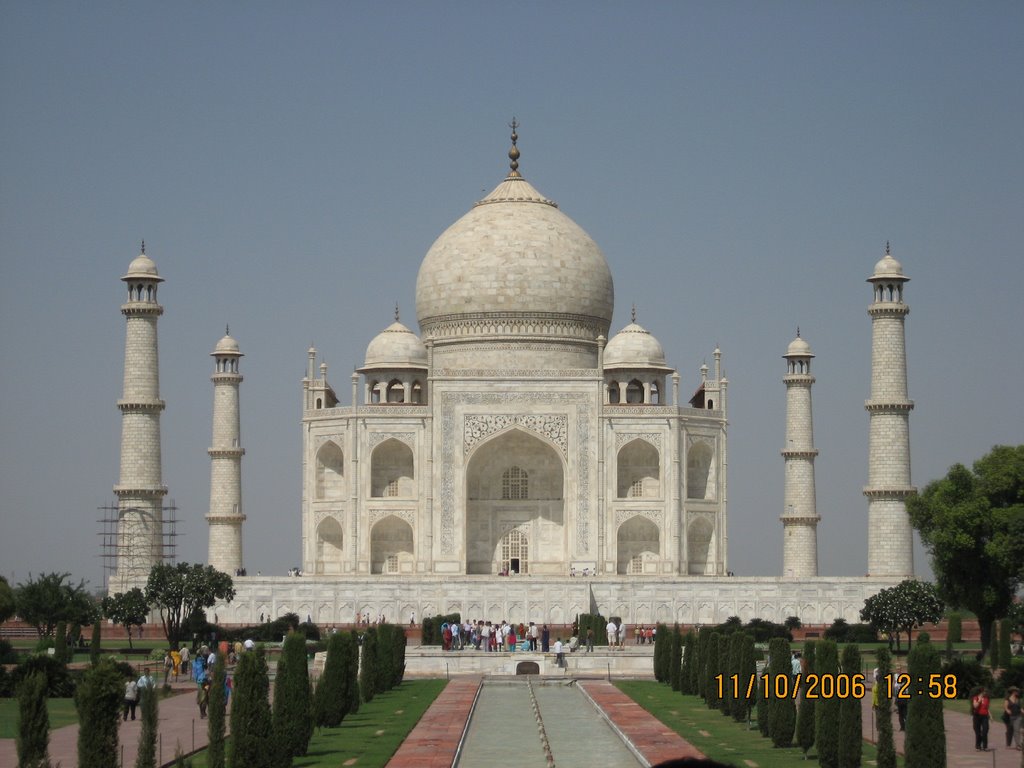
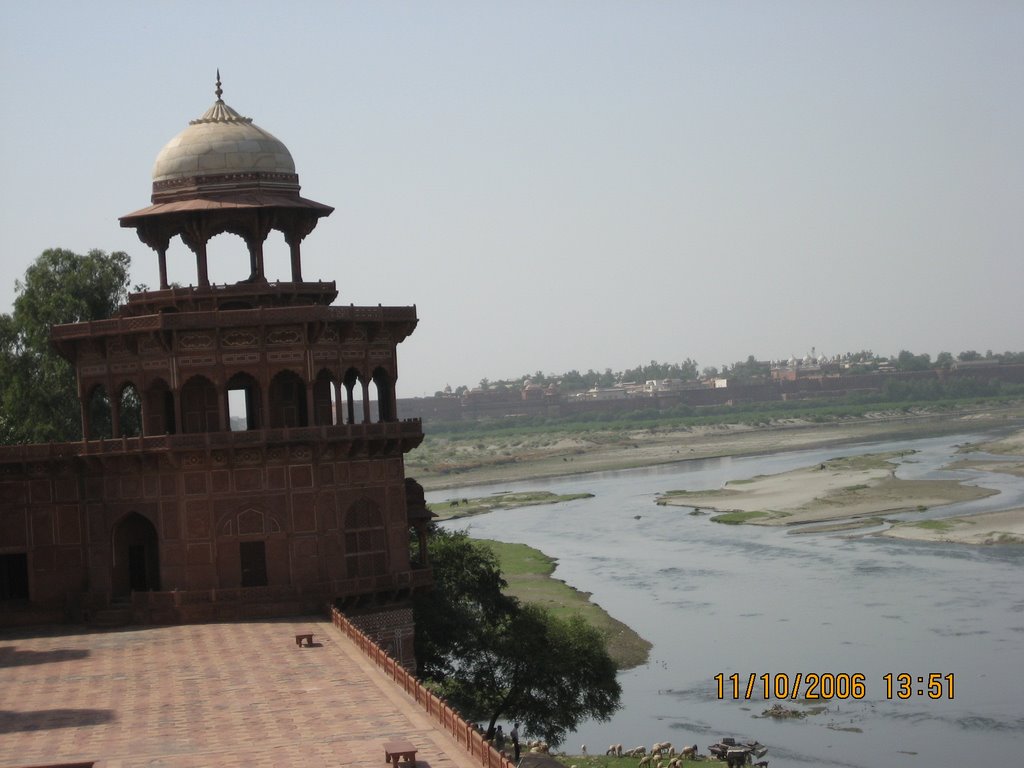
I recently visited the Taj Mahal which is appreciated for its romantic environs and especially much of its symbolic values that it stands for. On the banks of Yamuna stands a tomb which bears the testimony of the splendors of the Royal Court of the Mughal emperor Shah Jahan who constructed to show the world how much he loved his beloved Queen Mamtaj. Of course, it is one of the wonderful pieces of art and architecture that I have ever come across. However, unlike others, this Mughal mausoleum did not influence my thought; not because it is not a piece of art that deserves the attention of the people but because of the contribution of the toiling masses and the subjects of the King which has gone unrecognized. Another reason that remained implicit in my thought is do we really need a Taj to express, to say and to show how much we love someone. Why do human emotions and social relations need a trading medium? Globalization and the age of capital have always been accused of consumption and materialistic expression of emotions. Materialistic consumption is not the recent innovation in human thought. It has always intruded into human relationship. This materialistic expression of love lost its symbolic significance in the eyes of a lover.


In this context, it is worth quoting Sahir Ludhianvi’s Urdu poem that appeared in Lalit Mohan’s article in The Times of India on the 17th of November, 2006. The song is about the conversation between two lovers. Reacting to a suggestion from his lady-love, that they rendezvous amongst the romantic environs of the famed mausoleum, the muse asks her to choose some other spot…..

Countless people in this world have loved,
Who says their sentiments were not true,
But they had not the means to advertise their love,
Because, they were like you and I, impoverished.

My beloved, they too would have loved,
Whose skills have blessed it with form and beauty,
Memorials to their love remain unnamed, unmarked,
Ne’er a soul did light a lamp on them.

This garden, the bank of Yamuna, palaces,
These exquisite walls, these domes, these arches,
An emperor showed up by his wealth,
Has made a mockery of our poor people’s love,
My beloved, we shall meet some other place.


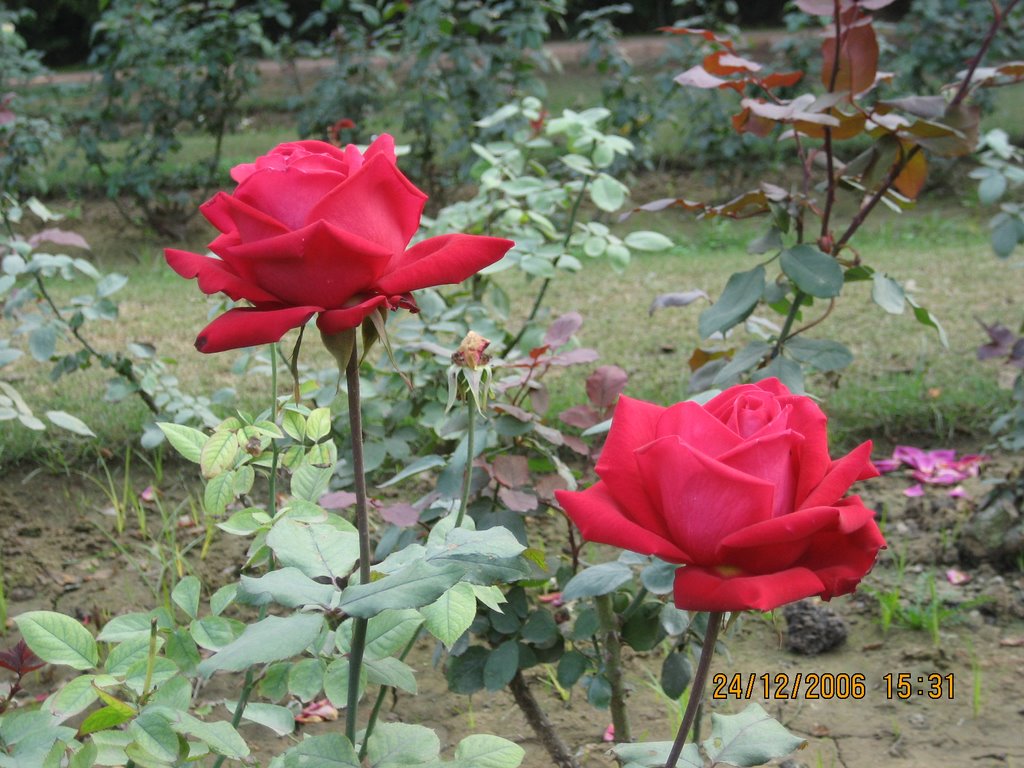
Hope a bunch of red rose is enough for us……….
Let’s check it out, how it works...……
I am sure we can…………..


Tuesday, November 14, 2006

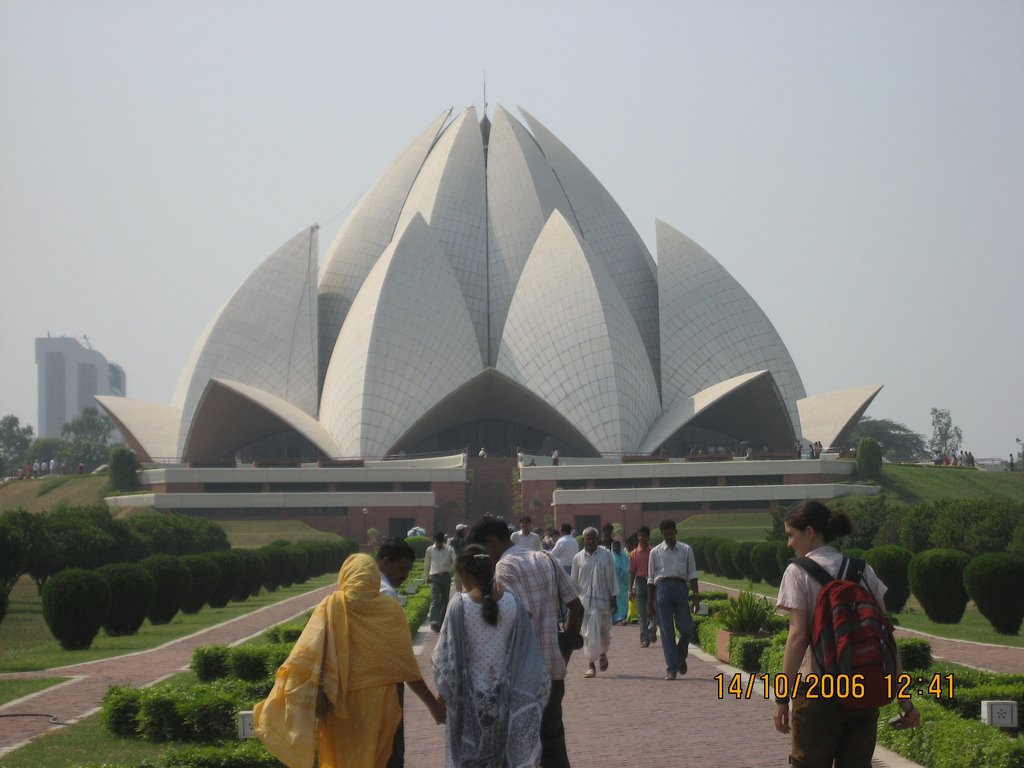
The King - Sahoo's palace and his place of worship - the Bahai Temple


Hierachy of Scholars?

Memories at the Bay

<>


sweet memories

Human life is very strange and uncertain. No one knows what is going to happen in the next moment. It is a long journey - mixture of both fun and boredom. It passes through certain junctures which leave deep impression on human beings for the rest of their life. This could either be a bad event that irks when flashes before the eyes, or some sweet memories that eventually become the indispensable part of life. These are the memories which you never like to forget. It reminds me my past and the childhood days. Forgetting the lessons, facts and figures in the history books was a usual thing for a small kid like me who always was scared that he might end up doing bad in the examination (Thisis the reason why I did not study HISTORY in later stage. And for this, I used to get up early in the morning to mog up the facts in the history book and to be honest not to forget. However today, when I wished to forget, I could not really do so. I asked me the question why is it so? And the answer that I found is that the former is the story of someone else and the later is mine. The story with which my life and love, existence and identity, self and being is indispensably involved. It is not a peice of flesh in the body that you can operate; It constitute those wonderful memories which have become the inseparable experience of my life.

Tuesday, October 17, 2006

Incredible India/ Orissa/Rajasthan

While Staying at home, I visited one of the Sacred land for the Hindus (I had been there before) which happened to be in Orissa. The place is called "PURI", known to the world for its famous "Chariot Festival". I also visited the SUN TEMPLE at Konark which is famous for its incredible architechtural designs and beautiful scenic view at the at the Bay of Bengalin the east coast of India. I also went to the temple which is very close to my home - this is a place where there is no idol is worshipped ans still a part of the Hindu Tradition. This is called the "Mahima Religion" which believes in the emptiness of the world and the sevice of mankind. The mahima saints alsways try to mingle with the world of nothing,this is a world which is far away from theis worldly suffering and pain,love and lust,need and greed, and life and death.

Sunday, October 15, 2006

August/September

Friends,
It was really a long time that have been in touch with you guys or with "The Life and Times of Sahoo". It was not because I was very busy doing my fieldwork, but because of my inaccesibility to electronics and electricity. I lived in a place where there was no water, no electricity and no other facility. I was scared int the begining, when I left Singapore for doing my fieldwork that whether I would be able to do something in the field. Frankly speaking I did not like doing fieldwork. The month of August at home and with friends was pretty boring without any work which forced me to go to the field as early as the 3rd of September. I wanted to see the tribal life and living in the interior and inaccessible part of hills. I went up to the tribal villages, stayed there for long time attending the meetings and talking to the people of that region. The simplicity of the tribal life and richness of their colourful culture attracted me the most. I observed the workings of the NGOs there and interviewed some the people regarding the functioning of these NGOs. I attended a huge mobilization and public rally of the tribal people who demanded their rightful entitlements fromt he state. It was really wonderful. The month of September was productive, interesting and most importantly was beautiful with the expression of my indispensable feelings of love and life.

It was great time in Udaipur. Besides work, my social life was found its blooming expression at the "Love Nest" - the place where I stay with some other friends. It was an incredible coincidence to meet the Love nesters who were very eager to explore the "Feelings of Love". Some succeeded, some still on progress, some still optimistic, some still confused in understandings the signals of the other (they are from the West who do not have any idea how do people express their feelings of love for the other which make them confused -cultural confusion) and some still trying to "Feel the Feelings". Yaa, Its nice..........

Love Nest is a place where I had some amazing experience. It has a lot of contribution for me in growing up with others and socialising myself. I got some new friends who are simply beautiful in their minds and thoughts and more importantly in their looks.

Congratulations to Pankaj and Marjalene for getting together and for getting engaged
Good Luck to the other Love Nesters in their journey towards this eternal feeling.
Thanks to Janneke for being a wonderful friend.

Ocotber has begun.....Yaa, Its nice..........